Welcome to the complete Car Buying Guide for San Juan UT. Whether you live in Blanding, Monticello, Bluff, or you commute along US 191 and US 163, this guide is built for the roads, weather, and budgets of San Juan County. Learn how to set a smart budget, compare vehicles that handle red rock terrain, evaluate used car history, and navigate Utah title, tax, and registration details with confidence. Explore financing paths for a range of credit profiles and see how local driving conditions affect choices like all wheel drive, four wheel drive, towing, and ground clearance. For inventory ideas, review our used inventory at used-inventory, get insights from blog, and compare county level pricing trends in our market research. When you are ready to go deeper, this page outlines practical checklists, negotiation strategies, and a test drive plan tailored to rural highways, canyons, and trailheads across San Juan County.
Use this San Juan County focused guide to prepare your budget, know which features matter on desert and mountain roads, and streamline documents for a smooth purchase. Compare price trends in used-car-market-research-san-juan-ut, and learn financing basics in used-car-financing-san-juan-ut or credit friendly options at second-chance-auto-financing-san-juan-ut. For more buying tips, see car-buying-guide-utah-ut.
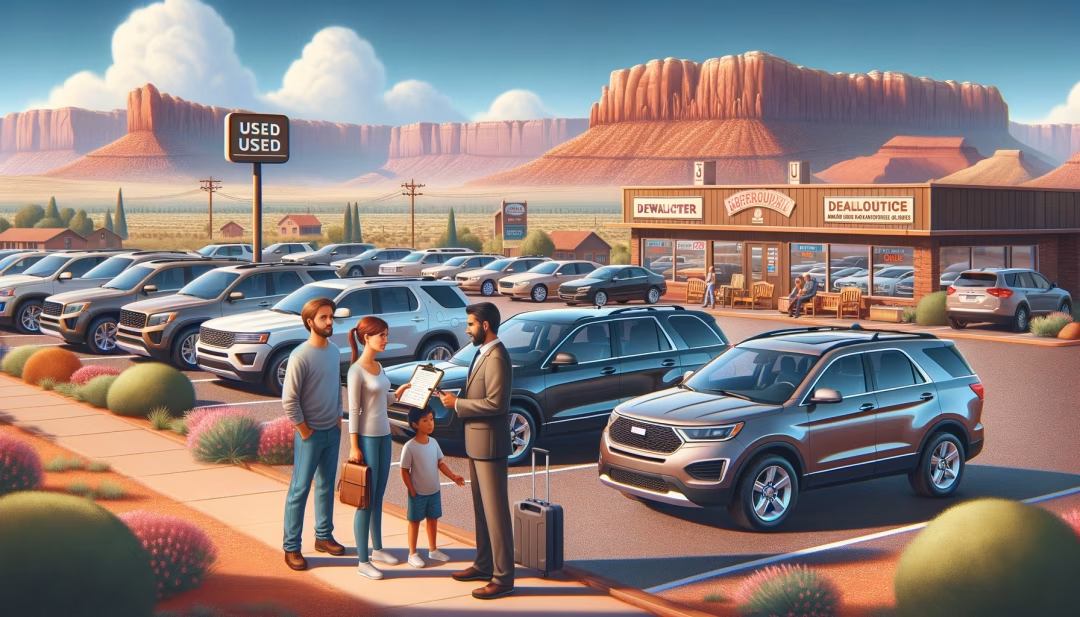
Buying a used car in San Juan County means factoring in long distances between towns, frequent elevation changes, and unpaved roads to national parks and trailheads. The right choice balances fuel economy for highway miles with capability for remote routes. Think through what you carry, how often you encounter snow or washboard dirt, and whether you haul gear or passengers. The sections below walk you through budget, financing, inspections, negotiation, paperwork, and local road considerations so you can purchase with clarity.
A solid budget includes down payment, monthly payment target, insurance, taxes and fees, and an initial maintenance buffer. In a rural area, it is wise to budget for tires, alignments, and fluids that see extra wear on gravel and heat. If you commute from Monticello to Moab or Blanding to Monument Valley, fuel costs over long stretches matter more than in a city.
To understand current pricing by body style and mileage, explore county specific trends in used-car-market-research-san-juan-ut. For state wide comparisons see used-car-market-research-utah-ut.
San Juan County drivers often balance ground clearance and cargo capacity with highway comfort. If you visit canyon overlooks or trailheads, a small SUV with all wheel drive can be a strong fit. For towing campers or boats on Lake Powell trips, consider a body on frame SUV or pickup with factory tow package. Commuters on US 191 may prefer a fuel efficient sedan with snow rated tires for winter.
Local and regional lenders understand rural driving needs and vehicle age ranges common to used inventory. Compare rates, terms, and total interest cost. If you are building or rebuilding credit, there are structured programs that reward on time payments. Learn the basics in used-car-financing-san-juan-ut and explore flexible paths in second-chance-auto-financing-san-juan-ut.
Having paperwork ready speeds up your visit and reduces back and forth from remote towns. Bring a valid Utah drivers license, current insurance card or policy info, recent pay stubs or income verification, residence documentation, and trade in title or payoff details if applicable.
A structured inspection reduces surprises. Combine a history report with a thorough visual and road test. If possible, inspect in daylight and on level ground. Heat, dust, and washboard roads can accelerate wear on suspension, bushings, and cooling systems in the Southwest.
Choose a loop with highway speeds, a hill climb, and a short stretch of rough pavement or graded gravel if conditions allow. Listen for suspension rattles, check braking stability on a downhill, and verify cooling performance at idle in warm weather. For towing, confirm hitch height, wiring, and trailer brake compatibility.
High clearance and robust cooling are great assets around Bears Ears and Cedar Mesa. If you drive in winter near Monticello, snow rated all season tires or winter tires can outperform part time 4WD in many situations. Look for engines with proven reliability and service access in rural areas.
Pricing fairness depends on condition, mileage, trim, packages, accident history, and regional supply. In a rural market, transportation costs and reconditioning often run higher than dense metro areas. Use data from used-car-market-research-san-juan-ut along with statewide views like used-car-market-research-salt-lake-ut to understand seasonality and pricing bands. Present comparable listings that match year, trim, options, and mileage. Be flexible on minor cosmetic items but firm on mechanical findings from your inspection.
To maximize trade value, gather maintenance records, clean the vehicle, and address low cost items like bulbs and wiper blades. Obtain a couple of quotes if you can. In rural counties, demand for reliable older 4x4s and fuel efficient commuters can spike seasonally. For reference points, browse similar vehicles in our sold-inventory and current used-inventory.
In Utah, expect sales tax based on your residence, registration fees, and possible emissions or safety checks depending on county rules. Ensure the title is properly assigned and lienholder information is correct if financing. Keep copies of your buyers order and odometer statement. Your dealer will guide you on plate and temporary permit steps so you can drive legally while registration is processed. For policy details, you can review our visitor-agreement and privacy-policy.
Decide based on mileage, how long you plan to keep the car, and your repair tolerance. Vehicles that see a mix of highway and rough access roads can benefit from coverage on suspension, steering, cooling, and electrical systems. Read coverage limits, deductible options, and where you can service the vehicle when traveling across Utah and neighboring states.
Advanced driver assistance systems can reduce fatigue on highway runs between towns. Adaptive cruise control, lane keeping assist, blind spot monitoring, and LED headlights offer meaningful value when you spend hours on rural routes. Check that sensors and cameras calibrate correctly after any windshield or bumper repairs.
Remote previews and digital paperwork can save a long drive, especially from Halls Crossing or Mexican Hat. Still, an in person test drive over real terrain gives the best read on noise, alignment, and suspension. Consider a hybrid approach: narrow choices online, then inspect and drive your final candidates in person.
Cross check VIN on the vehicle, title, and bill of sale. Confirm that recalls are addressed. Be cautious of titles from flood areas or with inconsistent odometer entries. Trust transparent inspection reports, service records, and clear photos of undercarriage and tires.
Plan an oil change if the last service date is unknown, rotate tires, and set baseline tire pressures for your elevation. Save photos of your tread depth and brake pad thickness to monitor wear over many highway miles. Build a simple trunk kit with water, jumper cables, and a compact air compressor for remote road confidence.
For more statewide tips, visit car-buying-guide-utah-ut, and for metro comparisons see car-buying-guide-salt-lake-ut. If you have questions about policies, check privacy-policy and visitor-agreement, or learn more about our team at about-us.